
FDA QMSR for Implantable Devices: What Changed in 2026
What FDA QMSR changed in 2026 for implantable devices: ISO 13485 alignment, design controls, supplier oversight, traceability and inspection readiness after February 2.
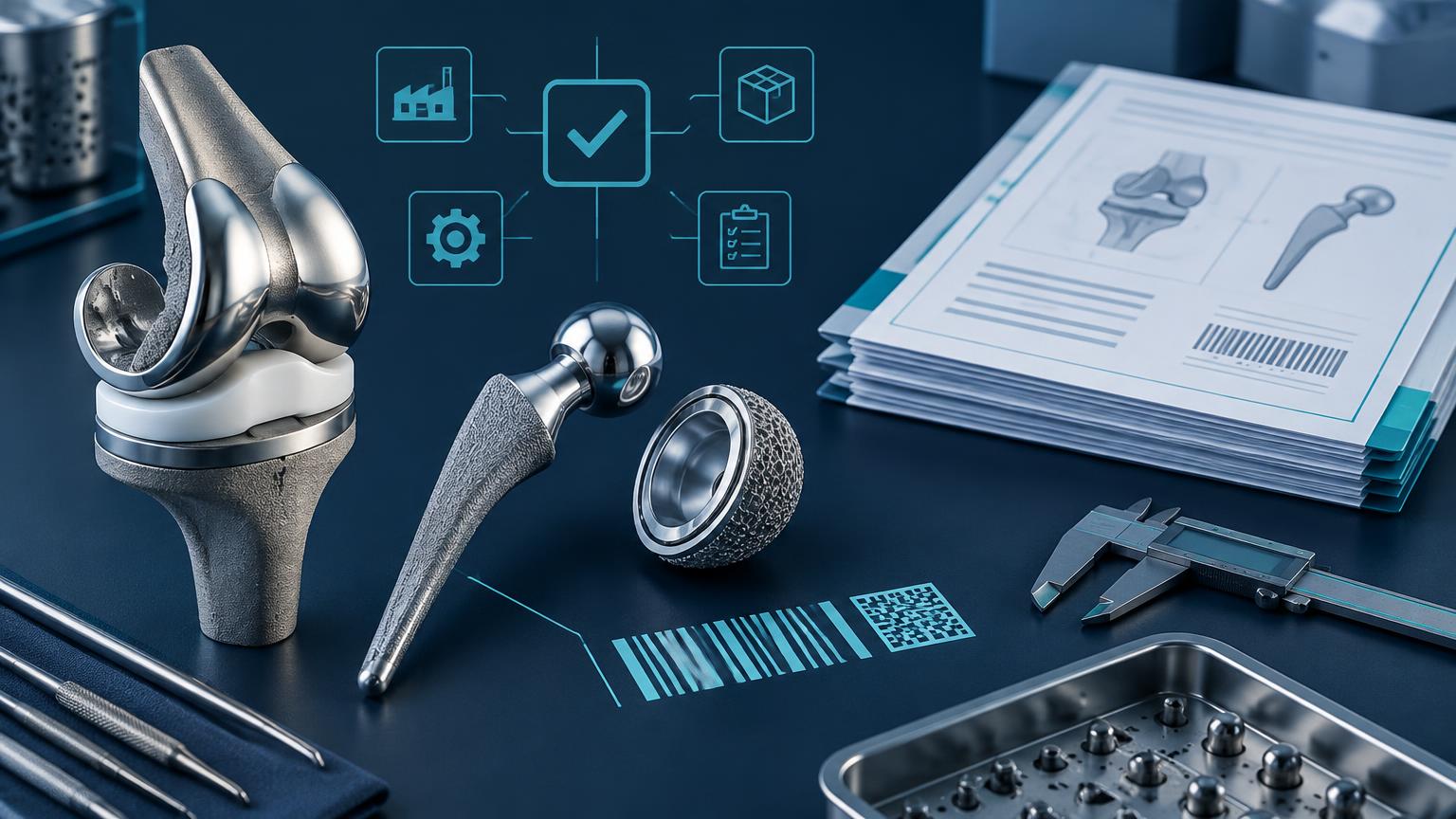
FDA’s Quality Management System Regulation, or QMSR, became effective on February 2, 2026. For orthopedic and other implantable-device manufacturers, the change is more than a new acronym for familiar quality procedures. It changes the regulatory framework against which development, production, supplier oversight and post-market processes are evaluated.
The central shift is FDA’s incorporation by reference of ISO 13485:2016 into 21 CFR Part 820, with additional US-specific provisions. The practical challenge is not to collect an ISO certificate and declare the transition complete. It is to show that the quality system consistently controls the risks and records associated with the finished implant throughout its lifecycle.
What changed on February 2, 2026?
FDA’s QMSR overview confirms the effective date and explains the alignment with ISO 13485:2016. The previous Quality System Regulation’s structure was replaced with a framework that incorporates the international standard while preserving FDA’s statutory authority.
Manufacturers should read the requirements in the current 21 CFR Part 820, not rely exclusively on legacy procedure references. Section 820.10 establishes quality-system requirements; sections 820.35 and 820.45 add FDA-specific record and labeling/packaging requirements.
For an implant manufacturer, the transition calls for a crosswalk between the applicable requirements and actual processes. Renaming procedures without checking ownership, evidence, interfaces and implementation does not demonstrate compliance.
ISO 13485 certification does not replace FDA compliance
A manufacturer already working to ISO 13485 may have a strong foundation, but third-party certification is not a substitute for meeting FDA requirements. FDA does not require ISO 13485 certification as the condition for QMSR compliance, and a certificate does not exempt a manufacturer from FDA inspection.
US obligations outside Part 820 still apply where relevant, including medical-device reporting, corrections and removals, registration and listing, and unique device identification. These should be connected to the quality system rather than treated as unrelated administrative tasks.
The international alignment can reduce duplication, but it does not create a single worldwide authorization. FDA clearance, quality-system compliance and overseas market-access requirements remain distinct decisions with different evidence and legal consequences.
Design and development controls still matter
QMSR did not make controlled development optional for implantable devices. Applicable design and development requirements now operate through the incorporated ISO framework and FDA’s scope provisions. For many Class II orthopedic implants, the basic expectations remain familiar: planned development, clear inputs, review, verification, validation, transfer and control of changes.
An implant team should be able to connect the intended use to design inputs, risk controls, verification results and released specifications. That chain becomes especially important when a porous coating, material, fixation feature or instrument interface changes after initial testing.
Read our orthopedic implant development guide for the connection between this evidence and a 510(k) strategy. A cleared submission does not excuse uncontrolled design changes afterward.
Risk management must connect the whole lifecycle
The incorporated framework places risk management across product realization. For implantable devices, that means connecting development decisions to purchasing, manufacturing, process validation, acceptance activities and post-market learning—not simply maintaining an isolated risk document.
Consider a change to a cleaning process for a porous titanium implant. The assessment should connect contamination hazards, residue characterization, biological evaluation, process validation and any effect on finished-device performance. The review should also determine whether additional testing or a regulatory submission is needed.
A practical cross-functional review includes engineering, quality, regulatory and manufacturing. The value is not the size of the risk file; it is whether decisions and controls remain coherent as the product evolves.
Supplier and process controls are critical for implants
Orthopedic systems often depend on external suppliers for alloys, coatings, machining, packaging or sterilization. Supplier qualification should match the significance of the purchased product or service and its impact on device safety and performance.
A supplier’s certificate of conformity may be useful evidence, but it does not replace a manufacturer’s responsibility to establish appropriate controls. Define specifications, acceptance methods, change-notification obligations and the information needed to investigate a failure.
Processes whose outputs cannot be fully verified through subsequent inspection or testing require appropriate validation under the applicable framework. For implants, examples can include sterilization or certain surface-treatment processes. Revalidation decisions should consider changes to equipment, parameters, materials and suppliers, not merely a scheduled anniversary.
Traceability is not just a barcode
ISO 13485 includes particular traceability provisions for implantable medical devices. A useful system connects components and materials with processing, distribution and relevant quality records so the manufacturer can investigate and act on a problem.
That is not identical to the separate FDA device-tracking requirements under Part 821, which apply to devices subject to an FDA tracking order. Nor is it identical to UDI. Manufacturers should distinguish these obligations instead of assuming that every implant has the same patient-level tracking requirement.
FDA’s UDI system overview explains device identification. Identification helps establish what a device is; a functioning traceability process establishes how relevant production and distribution records can be retrieved and connected.
Inspection readiness changed with the framework
FDA discontinued use of the Quality System Inspection Technique, or QSIT, when QMSR became effective. Its current inspection approach evaluates the new requirements. The FDA QMSR frequently asked questions explain the transition and implications for records.
One important change is the removal of the former Part 820 exception that limited routine inspection of management-review reports, quality-audit reports and supplier-audit reports. Treat those records as substantive evidence of how the system operates, not protected paperwork.
An internal audit should therefore test implementation: can staff retrieve the relevant records, explain a decision and show that an identified problem led to an effective corrective action?
A practical QMSR readiness review for September 2026
Start with five connected questions. Have legacy procedures been mapped to current requirements? Does development evidence trace through risk controls and transfer? Are critical suppliers and validated processes controlled? Can implant traceability records be retrieved promptly? Do complaints, corrective actions and management review feed back into product and process decisions?
For each gap, assign an owner, an evidence requirement and a realistic completion date. Prioritize weaknesses that affect patient safety, released product or the ability to investigate a field issue. A document-only remediation plan may leave operational risk untouched.
Use the CAHIR compliance frameworks guide to explore related controls. MedTech Copilot can support structured regulatory questions and planning, but an AI-generated checklist is not an inspection verdict or proof of compliance.
Keep quality readiness connected to commercial readiness
For implant teams, reliable quality processes support the evidence story presented to surgeons, hospitals and purchasing committees. They do not, by themselves, establish reimbursement or adoption. MedTech Compass addresses the separate market-intelligence side of that pathway.
Explore our orthopedic and implantable device specialty, contact CAHIR, or request a demo to connect development, regulatory planning and market access. This article is educational; device-specific obligations require review against the applicable regulations and current FDA resources.
Sources
FDA: Quality Management System Regulation Overview eCFR: Current 21 CFR Part 820 FDA: QMSR Frequently Asked Questions FDA: Unique Device Identification System
Follow MedTech Insights
New articles on FDA 510(k) and De Novo pathways, CE Mark and EU MDR, and device reimbursement — sent to your inbox as they publish.