
Germany's DiGA Reform 2026: Outcomes-Based Pricing and What It Means for Digital Health Exporters
Germany is tying part of every DiGA reimbursement price to measured outcomes from 2026. Here is what the AbEM performance measurement requires, what the 20 percent rule does to pricing, and how exporters should respond.
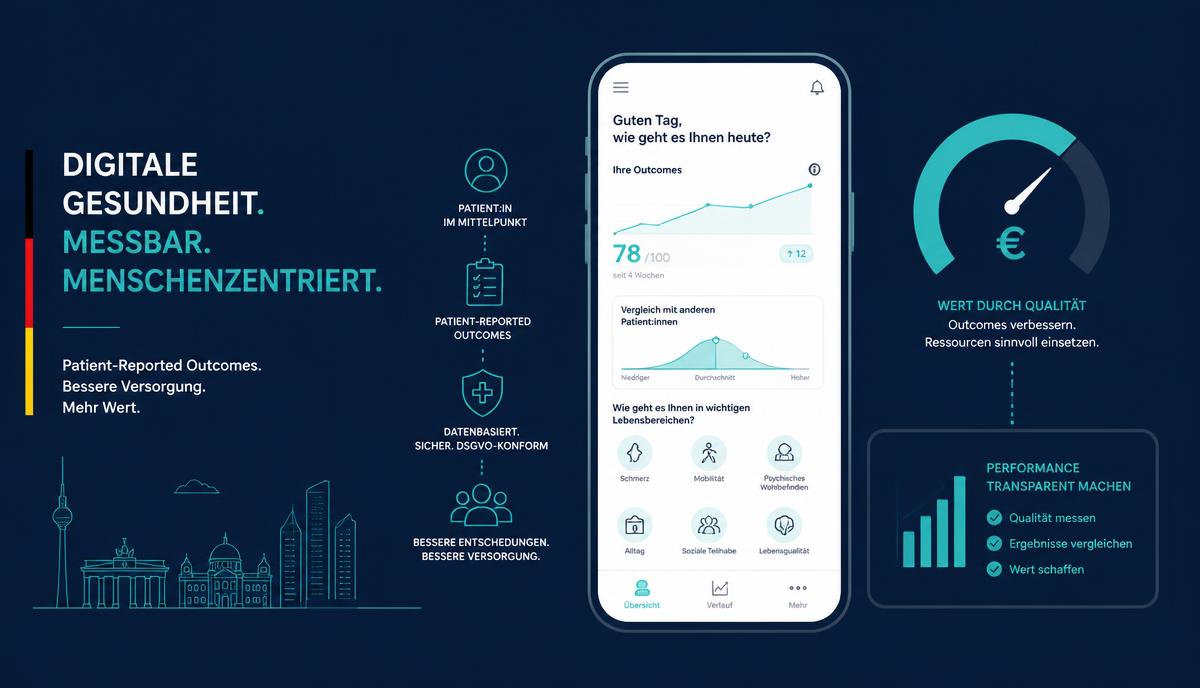
Germany built the first statutory reimbursement route for prescription software, and for five years the DiGA pathway has been the reference case for anyone arguing that software can be paid for as a treatment rather than an IT purchase. In 2026 the terms change. Part of the price now depends on what the product demonstrably does in use.
For exporters planning a German launch, this is not a compliance footnote. It changes the product architecture, the data model and the revenue forecast.
What DiGA looked like before
A CE-marked software medical device could apply to BfArM through a fast-track process. Approved products were listed in the DiGA directory, prescribed by physicians and reimbursed by statutory health insurance covering roughly 90 percent of the population.
The commercial appeal was the provisional listing: a product could be listed for a trial period while it generated the evidence of positive care effects, and during that period the manufacturer set its own price. Prices were reset afterwards through negotiation with the GKV-Spitzenverband, the federal association of statutory health insurance funds, and usually fell sharply.
That first-year pricing freedom was the part payers disliked most, and it is the part being dismantled.
What changes in 2026
Two mechanisms matter.
The first is application-accompanying performance measurement, known by its German abbreviation AbEM. From 1 July 2026, permanently listed DiGAs with a demonstrated medical benefit must collect defined performance data in the product itself, with the first report to BfArM due in April 2027. The requirement phases in: usage data first, then patient-reported global impression of change and satisfaction measures, then indication-specific patient-reported outcome measures in later stages.
The second is the pricing link. Under the reformed § 134 SGB V arrangements, at least 20 percent of the reimbursement price is coupled to performance-dependent parameters. AbEM is what makes that coupling measurable. In effect, a fifth of your German revenue is contingent on outcomes your own product has to capture, structure and report.
Alongside this, the German Health Finance Commission has proposed going further, including negotiating prices from the moment of listing and reconsidering the provisional listing route entirely. That is a proposal rather than law, but the direction is clear and worth planning against.
Why this is an engineering decision, not a reporting one
The common mistake is to treat AbEM as a dashboard added before the deadline. It is not.
Collecting usage telemetry and patient-reported outcomes at the required granularity touches the account model, in-app survey logic, consent architecture, the data protection concept and the data retention design at the same time. Consent that was drafted for treatment delivery may not cover outcomes reporting. An anonymous usage model may not support longitudinal measurement. A product built without a durable patient identity cannot produce a defensible outcome series.
These are foundation-level choices. Retrofitting them after listing is expensive, and in some architectures it means rebuilding the data layer.
What the market numbers say
The German market is real but not enormous, and it is consolidating. As of the end of 2025, the DiGA directory held 74 cumulatively listed products, of which 58 were actively listed and 16 had been delisted. Reported GKV spending across the programme since September 2020 was in the region of 400 million euros, with roughly 1.9 million DiGAs prescribed or approved cumulatively and growth of over 60 percent between 2024 and 2025.
The pricing picture matters more than the totals. For 2025, the GKV-Spitzenverband reported an average manufacturer-set price of around 544 euros against an average negotiated reimbursement amount of around 227 euros. Payers read that gap as a control failure. Manufacturers read it as compensation for the cost of trial-phase evidence generation. Either way, a business case built on the listed price rather than the negotiated one is off by a factor of more than two.
What exporters should do
Design for measurement before you apply. Build the account model, consent flow and outcome capture into the product now, not after listing. If you are engineering for Germany, you are engineering for a data obligation as much as a clinical one.
Model the negotiated price, not the launch price, and then take 20 percent of it as performance-contingent. That is the realistic revenue line.
Pick the outcomes you can move. Where the framework allows choices about which measures you report, selecting instruments that respond to what your product actually improves is a pricing decision, not a scientific formality.
Sequence Germany against other markets deliberately. France's PECAN and LATM routes, the UK route and the emerging US software pathways all have different evidence and timing profiles, as our post on international reimbursement pathways sets out. Our EU MDR and UKCA guide covers the regulatory precondition, since DiGA listing assumes a valid CE mark and the class of your software drives that timeline.
Score it rather than assume it. MedTech Compass evaluates reimbursement friendliness, route and regulatory difficulty across 25+ markets, and DevicePath handles classification and pathway triage. Our market access guide works through the evidence-to-payment sequence in more detail.
The wider signal
Germany is still the most navigable statutory route for prescription software anywhere. What the 2026 reform says is that the grace period for unproven products is over, and that outcome data is becoming the currency of the price negotiation rather than an afterthought to it.
Every payer watching Germany is taking notes. Manufacturers who build measurement into the product will find the next market easier. Those who bolt it on will pay for it twice.
Sources
1. BfArM, DiGA directory: https://diga.bfarm.de/ 2. BfArM, DiGA-Leitfaden (fast-track guide for manufacturers, version 3.6): https://www.bfarm.de/SharedDocs/Downloads/DE/Medizinprodukte/diga_leitfaden.pdf 3. DUX Healthcare, DiGA AbEM 2026: the application-accompanying performance measurement: https://dux-healthcare.com/en/knowledge/diga/abem-outcomes/ 4. DUX Healthcare, DiGA Market Report 2026 (GKV-Spitzenverband and SVDGV figures): https://dux-healthcare.com/en/knowledge/business-strategy/diga-market-report-2026/ 5. heise online, Digital health applications under pressure: proof of benefit to come sooner: https://www.heise.de/en/background/Digital-health-applications-under-pressure-proof-of-benefit-to-come-sooner-11296670.html
This article is general information about German reimbursement policy, not legal advice. Requirements and dates continue to move; confirm the current DiGA-Leitfaden version before acting.
Follow MedTech Insights
New articles on FDA 510(k) and De Novo pathways, CE Mark and EU MDR, and device reimbursement — sent to your inbox as they publish.
Comments
No comments yet. Be the first to add your read on this.